1
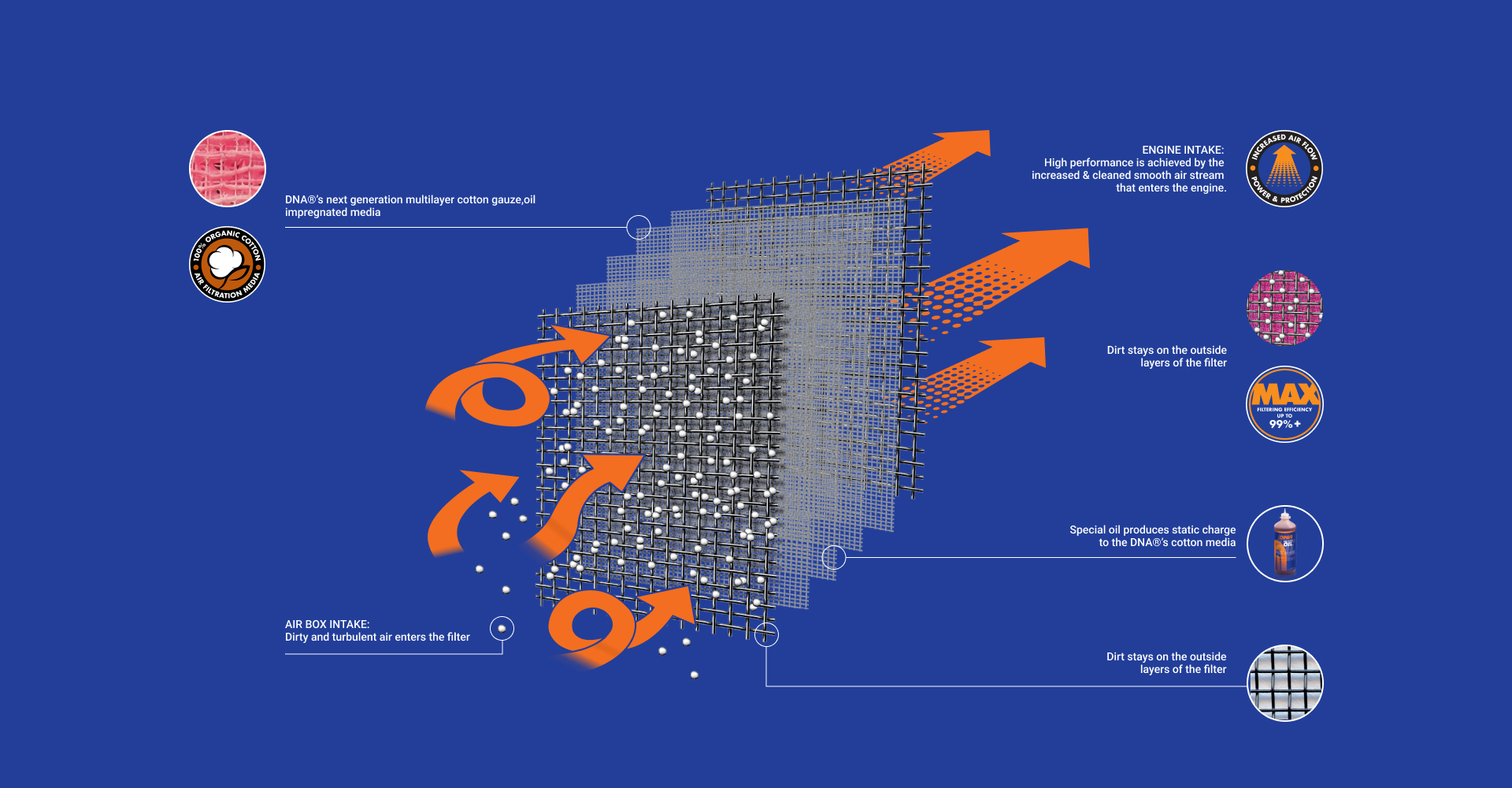
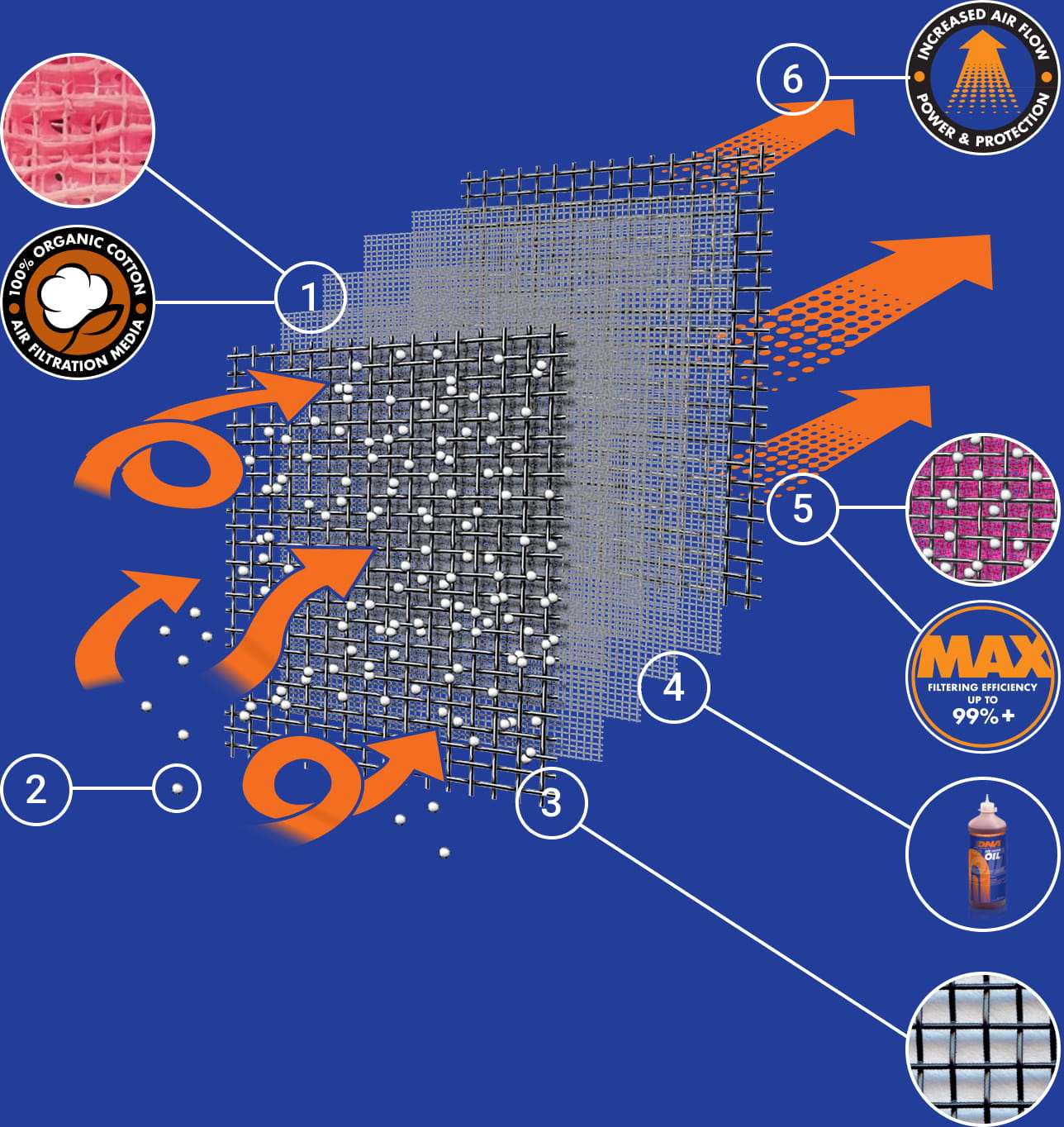
DNA's next generation multilayer cotton gauze, oil impregnated media
2
Dirt stays on the outside layers of the filter
3
Dirt stays on the outside layers of the filter
4
Special oil produces static charge to the DNA's cotton media
5
Dirt stays on the outside layers of the filter
6
ENGINE INTAKE: High performance is achieved by the increased & cleaned smooth air stream that enters the engine.
Technology inspired by human respiration!
Surprisingly, the technology used by DNA filters to clean the air is familiar to all of us. It is part of our body and is constantly used to keep us alive! And that is none other than the human respiratory system, which filters the air we breathe! Tiny liquid hairs (cilia) protect the nasal passages and the rest of the respiratory tract, filtering out dust and microparticles that enter the nose through the air we breathe. Once lubricated, DNA cotton gauze performs exactly the same function as these millions of microscopic protrusions! This "hair-like hybrid," as we call it, is a specially designed combination of microfibers per square millimeter. The weave and thread of this unique gauze are the result of intensive research and testing by DNA's Development Department engineers. The "capillary hybrids" are impregnated with DNA's specially designed oil, thus acquiring this exceptional filtering medium that only DNA can offer. The end result provides very high performance and extremely high air flow rates.
Trapping the "enemy" with static charge!
The DNA filter is designed in such a way that positive static electricity is generated every time air passes through the folds of the oiled cotton element. This short-range static charge, which comes from the oiled microfibers, magnetizes all the dirty particles and dust in the air in an extremely effective way. Let's remember the well-known school experiment with the pen, which magnetized small pieces of paper after rubbing it on fabric. This is exactly what happens as air passes through the filter. More specifically, even the tiniest dust particles, measuring 5 microns, change course and stick to the microfibers, even if the "gaps" between the microfibers reach 150 microns. The first layer of dust that sticks to the microfibers will absorb a small amount of oil, enough to become statically charged. This also becomes part of the filtration process! In this way, we attract new particles that in turn help the gauze in the filtration process! Finally, dust and various foreign particles continue to be trapped on the surface of the filter as air enters through it, until it is completely covered.
Tests in extreme environmental conditions
Our filters have been successfully tested even under the extremely difficult environmental conditions that prevail during the "Rally DAKAR"! Crossing Argentina, climbing the Andes and even reaching the Atacama Desert in Chile, we managed to keep the racing engines clean, keeping out the terrible, fine desert sand, also known as "fesh-fesh," outperforming foam filters! So the myth is debunked: DNA filters can be used successfully in any environment, on and off the road, in the desert or in the countryside. In any case, DNA air filters will be there to protect you.
Increased torque and horsepower
DNA filters smooth the flow of air passing through the filter, reduce turbulence, and send clean, fresh air of uniform flow to the engine intakes, thus increasing torque and horsepower. In addition to high air flow, the smoothness and uniformity of the flow is equally important. This explains why we see a reduction in horsepower when a motorcycle or car is dynamometer tested without a filter. This is because the air flow in the filter box is not smooth, resulting in turbulence and reduced power.